





A Melbourne Storm jersey is one of the most recognisable pieces of kit in Australian sport. That purple doesn't look like anything else on a rugby league field, and it hasn't since 1998.
But whether yours is signed, match-worn, a 2020 premiership shirt or just the one you've worn to AAMI Park for the last fifteen winters, it usually ends up in the same place:
Folded in a drawer.
A drawer creases it along the same lines until those creases stop coming out. A coathanger stretches the shoulders. And open air is the worst option of all for a signed jersey, because marker ink fades long before the fabric does.
Collectors have worked out far better answers than a drawer.
From flat framing and number-out displays to shadow boxes, jersey walls and lit feature displays, the same Storm jersey can look completely different depending on how you present it.
Here are 7 ways to display a Melbourne Storm jersey — and turn it from stored clothing into the best thing on the wall.
| Your Priority | Recommended Display |
| Simple, clean and classic | Flat Framed Display |
| Show a favourite player | Number-Out Display |
| Tell the story of a match | Shadow Box Display |
| Display several jerseys | The Jersey Wall |
| Build a whole room around it | Match-Day Room Display |
| Protect a signed or valuable jersey | Lockable UV Frame |
1. Flat Framed Display: The Classic Setup
Framing a jersey flat is the most common approach for a reason. It works.
Laid out square inside a frame, the jersey reads instantly from across a room. The Storm's block purple with the lightning bolt is a strong graphic on its own — it doesn't need any help, and a flat frame gets out of its way.
This orientation works especially well in:
- Lounge rooms and hallways
- Home offices
- Games rooms and home bars
- Above a desk or TV unit
- Sports bars and clubrooms
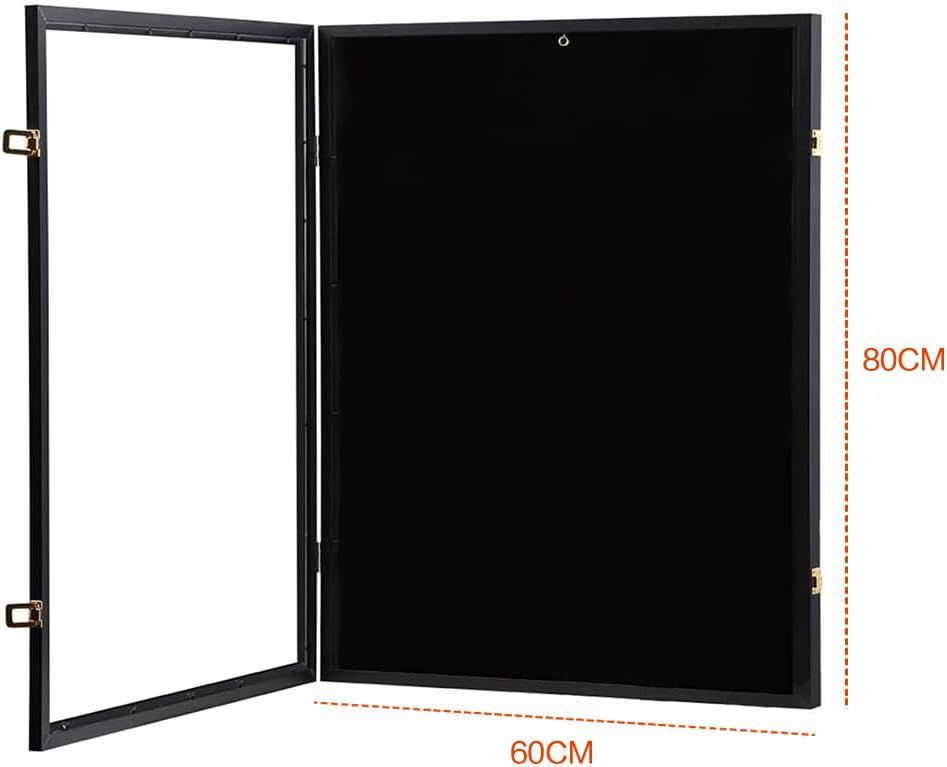
A standard adult NRL jersey lays out comfortably in a frame around 80 × 60 cm. NRL jerseys have sleeves, so they take up more width than an AFL guernsey or a basketball singlet — worth knowing if you're eyeing off a frame built for another code.
Best for: Anyone who wants their jersey up on the wall today without overthinking it.
.jpg)
2. Number-Out Display: Show the Player, Not the Sponsor
Here's the decision most people don't realise they're making until the jersey is already in the frame:
Which side faces out?
The front gives you the club logo, the sponsor and the badge. The back gives you the number and the name.
If your jersey is tied to a specific player — a Cameron Smith, a Billy Slater, a Munster — the back is almost always the better call. A number and a name carry more meaning to a visitor than a sponsor logo does, and they date the jersey to an era without you having to explain anything.
Signed jerseys change the maths again. Signatures usually sit across the front or the upper chest, so if the value is in the autograph, that side faces out and the decision makes itself.
Best for: Player-specific jerseys, retirement-season shirts and anything with a signature.
3. Shadow Box Display: Frame the Match, Not Just the Jersey
A jersey on its own says which club you support. A jersey surrounded by the rest of the day says which match mattered.
Collectors regularly build a display around a single game using:
- The match ticket or membership card
- A photo from the day
- The match programme
- A team sheet or line-up card
- A small printed card with the date, score and venue
The frame's 4 cm depth gives you room to sit flat items alongside the jersey without crushing anything.
This is easily the most personal of the seven, and the one that gets the most questions from people who visit. A 2020 grand final ticket sitting next to the jersey turns a piece of merchandise into a record of where you were that night.
Best for: Grand final jerseys, first-game jerseys, milestone matches, and anything with a story attached.
4. The Jersey Wall: Display a Whole Collection
Once you own three or four jerseys, the question stops being "where does this one go" and becomes "how do I show all of them?"
A grid of matching frames is the answer most collectors land on. Same frame, same spacing, hung level — the repetition is what makes it look deliberate rather than cluttered.
Ways collectors organise a Storm wall:
- By era — 1999, 2012, 2017, 2020 in sequence
- By player — the Smith, Slater and Cronk years side by side
- By jersey type — home, away, heritage, Anzac and Indigenous rounds
- Chronologically — left to right across the wall as a timeline
Two or three frames in a row already reads as a collection. Six looks like a museum.
Best for: Long-term members and anyone whose jersey count is quietly growing.
5. Feature Lighting: Make the Purple Do the Work
Storm purple is a dark colour. In a dim hallway or a room with no natural light, it can flatten out and lose the detail in the bolt and the trim.
Lighting fixes it immediately.
Options collectors use:
- A picture light mounted above the frame
- An LED strip run along the underside of a shelf above
- A directional ceiling spot angled onto the wall
- Warm-white rather than cool-white, which suits the purple far better
One thing to get right: light the frame, not the room. A single directed light source makes the jersey the focal point of the wall. Flat overhead lighting makes it just another object on it.
Best for: Dark rooms, home bars, and anyone who wants the display to look intentional rather than incidental.
6. Match-Day Room Display: Build the Room Around It
For some supporters the jersey isn't the whole display — it's the anchor of one.
A framed jersey sits naturally at the centre of a Storm corner alongside:
- A signed Steeden in a ball case
- Scarves and membership cards
- Framed photos from AAMI Park
- Season memberships going back years
- Club prints or premiership posters
The trick is hierarchy. One large framed jersey at eye level, smaller pieces arranged around it. When everything is the same size, nothing leads — and the wall stops making sense.
Best for: Home bars, games rooms, man caves and dedicated supporter spaces.
7. Lockable UV Frame: Protect a Signed Jersey Properly
Not every supporter is chasing the most dramatic display. For plenty of people the real question is much more practical:
How do I stop this jersey deteriorating?
Long-term open display is genuinely hard on a jersey, especially in Australia:
- Dust settles into the fabric and the stitching
- Signature ink fades faster than the material it's written on
- Sunlight through a window will lift colour out of the purple over a few summers
- Kids, pets and visitors handle what's within reach
- Coathangers stretch shoulders permanently
Our Jersey Frame Display Case is built for exactly this. It measures 80 × 60 × 4 cm, fits a standard adult NRL jersey laid flat, and mounts straight to the wall.
The parts that matter for a signed jersey:
- UV protection acrylic — guards the jersey and its signatures against fading from sunlight and artificial light
- Lockable frame — keeps it secure from unauthorised handling
- Clear acrylic front panel — full visibility with a physical barrier against dust
- Black finish — a neutral surround that suits most interiors and doesn't compete with the purple
- Easy wall mounting — and the jersey can be swapped out whenever you want
Best for: Signed jerseys, match-worn jerseys, and anything you plan to still have on the wall in twenty years.
Which Storm Jersey Display Is Right for You?
| Your Priority | Recommended Display |
| Simple, clean and classic | Flat Framed Display |
| Show a favourite player | Number-Out Display |
| Tell the story of a match | Shadow Box Display |
| Display several jerseys | The Jersey Wall |
| Build a whole room around it | Match-Day Room Display |
| Protect a signed or valuable jersey | Lockable UV Frame |
There's no single right answer here — each option solves a different problem.
But if the jersey is signed, match-worn, or attached to a day you actually remember, the protection question outranks the styling question. A jersey that's faded can't be un-faded, and a signature that's gone doesn't come back.
Get it enclosed first. Then worry about the lighting.
Frequently Asked Questions
Will the frame fit a Melbourne Storm jersey?
Yes. At 80 × 60 × 4 cm it suits most standard adult NRL jerseys laid flat, including Storm home, away, heritage and special-round designs.
Does it come with a jersey?
No — this is the display frame only. Jerseys are not included.
Will it stop a signed jersey from fading?
The acrylic front panel is UV protective, which guards the jersey and its signatures against fading from sunlight and artificial light. For best results, still avoid hanging it where direct afternoon sun lands on the wall.
Can I mount it on the wall?
Yes. The frame is designed for straightforward wall mounting, with minimal assembly required.
Can I change the jersey later?
Yes. The frame opens so you can remove or swap the jersey whenever you like, which makes it easy to rotate a collection season by season.
Does it fit other sports?
Yes — the same frame suits AFL guernseys, NBL and NBA singlets, rugby union, soccer, cricket and hockey jerseys.
Final Thoughts
Rugby league wasn't supposed to work in Melbourne. Twenty-eight seasons, four premierships and twelve grand finals later, that purple jersey means something specific to the people who own one.
How you display it is part of that. Some supporters want the number and the name facing out. Some want the ticket and the photo from the night beside it. Some want six frames in a row telling the whole story from 1999 onwards.
The only genuinely wrong answer is the drawer.
CLICK HERE TO BUY THIS JERSEY FRAME
